Nature · Manhattan
Seneca Village Community
Unearthing Seneca Village's Hidden Roots
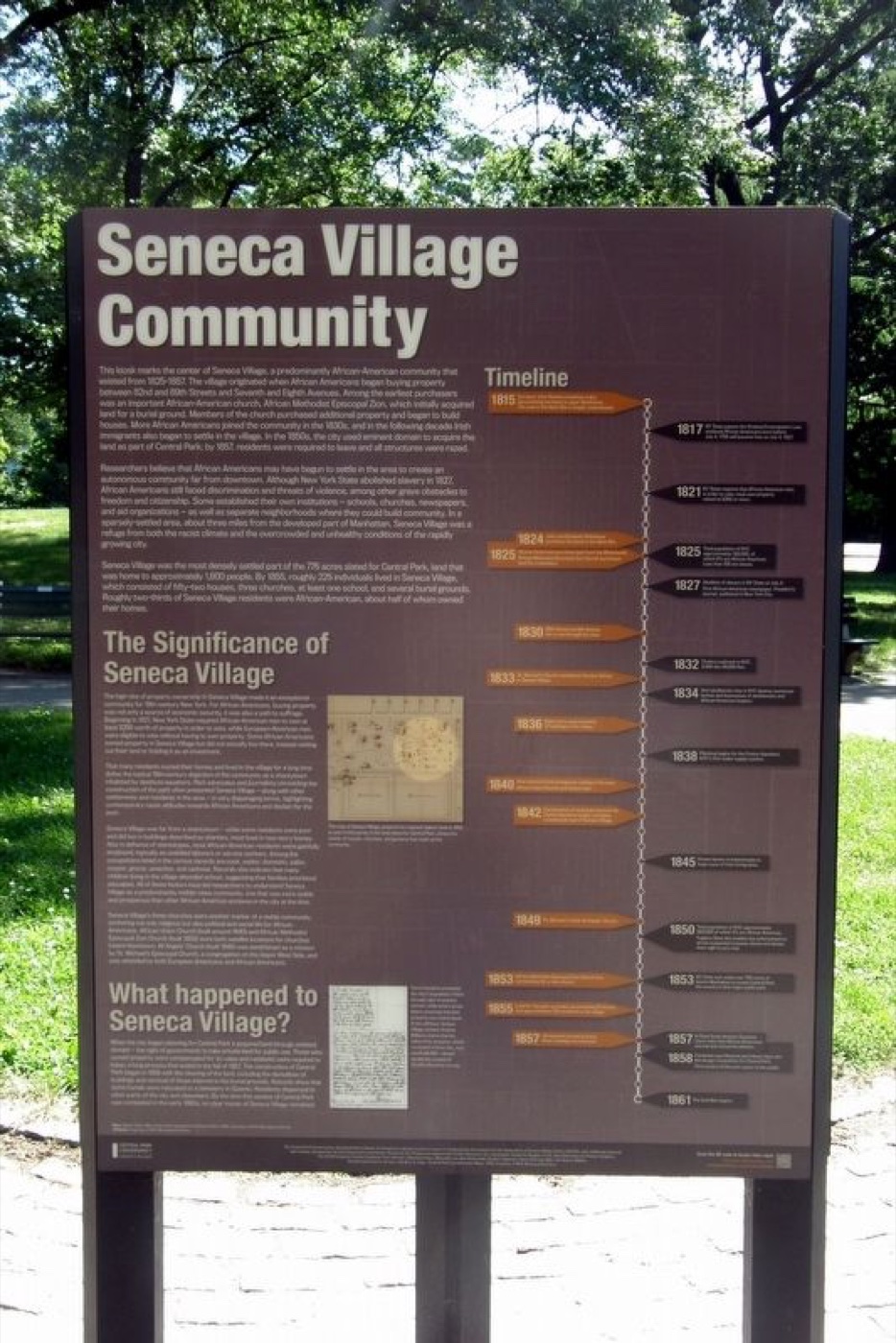
Discover the archaeological treasures beneath Central Park that tell the story of Seneca Village, Manhattan’s resilient 19th-century African-American community with homes, churches, and a vital natural spring.
The story
Between 1825 and 1857, Seneca Village flourished as a predominantly African-American neighborhood with about 225 residents owning over half the land. Despite official portrayals calling it a wasteland, residents built stable homes, schools, and churches. Archaeological excavations since the 1990s, including a major dig in 2011, uncovered thousands of artifacts like household items and building materials, affirming the village’s middle-class status. Remarkably, natural features like Summit Rock—the highest point in Central Park—and Tanner’s Spring remain today, linking us physically to this displaced community and their history. Walking here, you tread on a landscape shaped by both urban growth and the enduring spirit of Seneca Village’s residents.
Source: HMDB — Seneca Village Community (archived 2025)
Find it with City Ramble →Visiting
Central Park, New York NY 10024, United States of America., Manhattan. City Ramble stops can be found from public sidewalks and parks; buildings, churchyards and museums keep their own opening hours. Open in Google Maps.
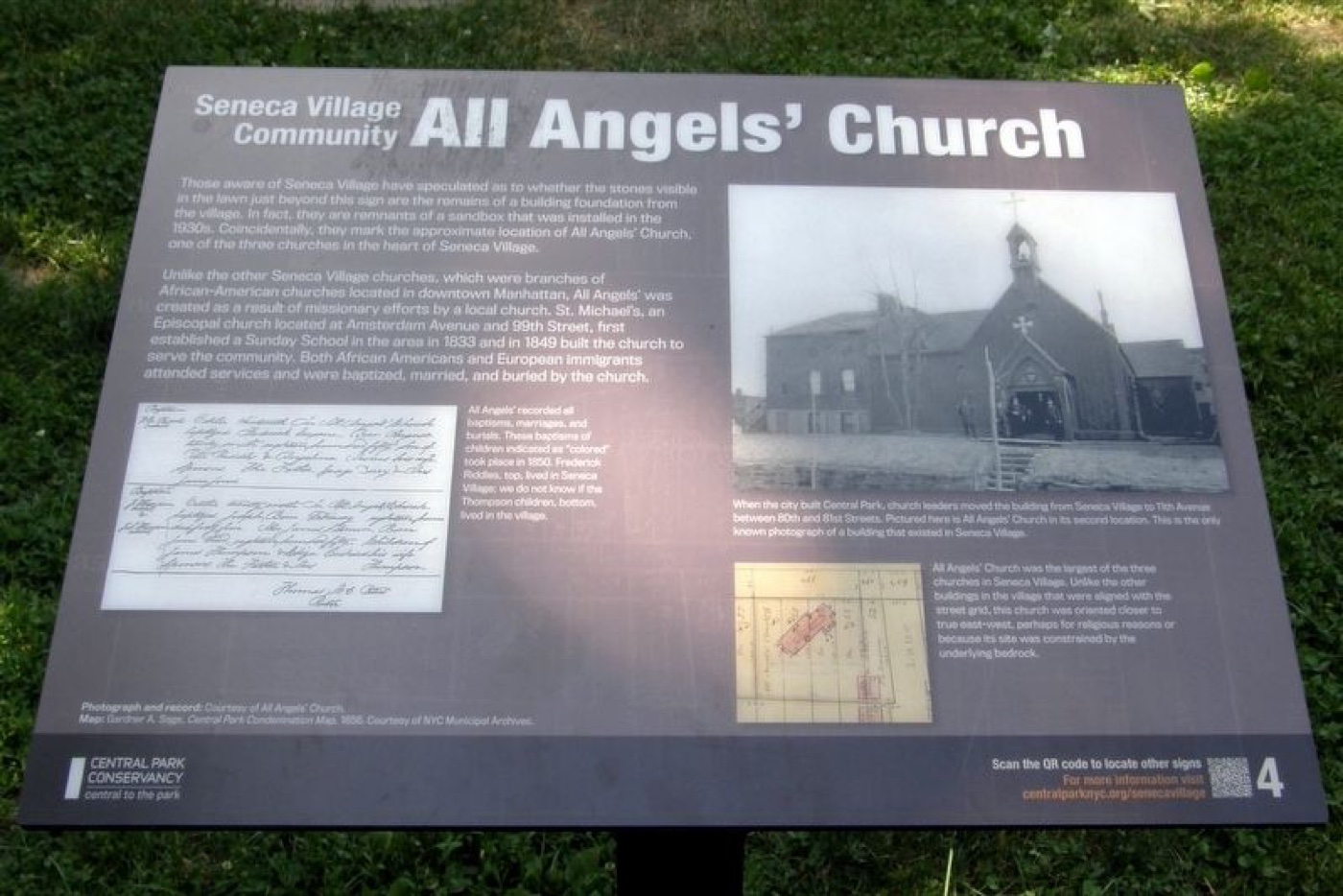 All Angels’ Church
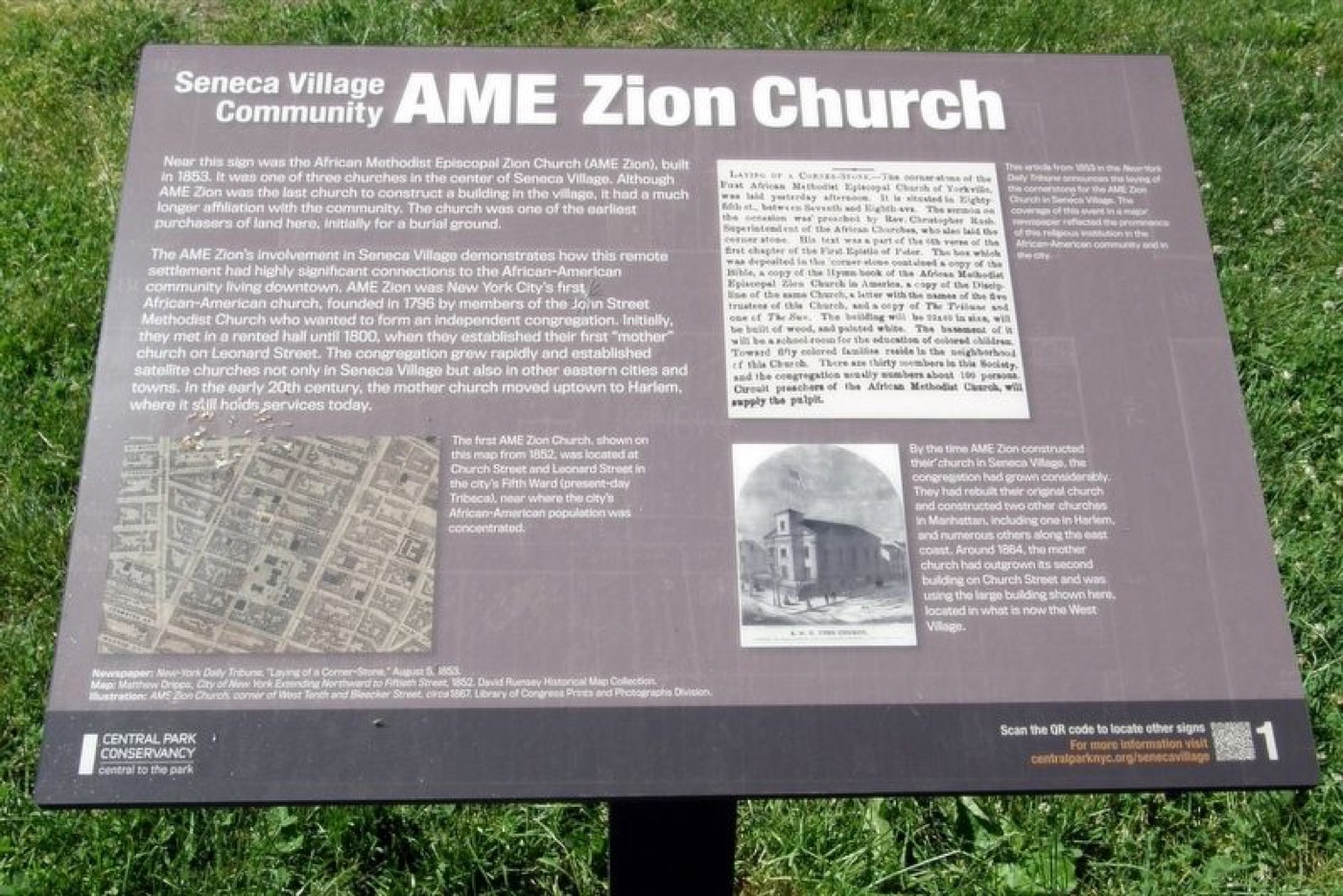 AME Zion Church
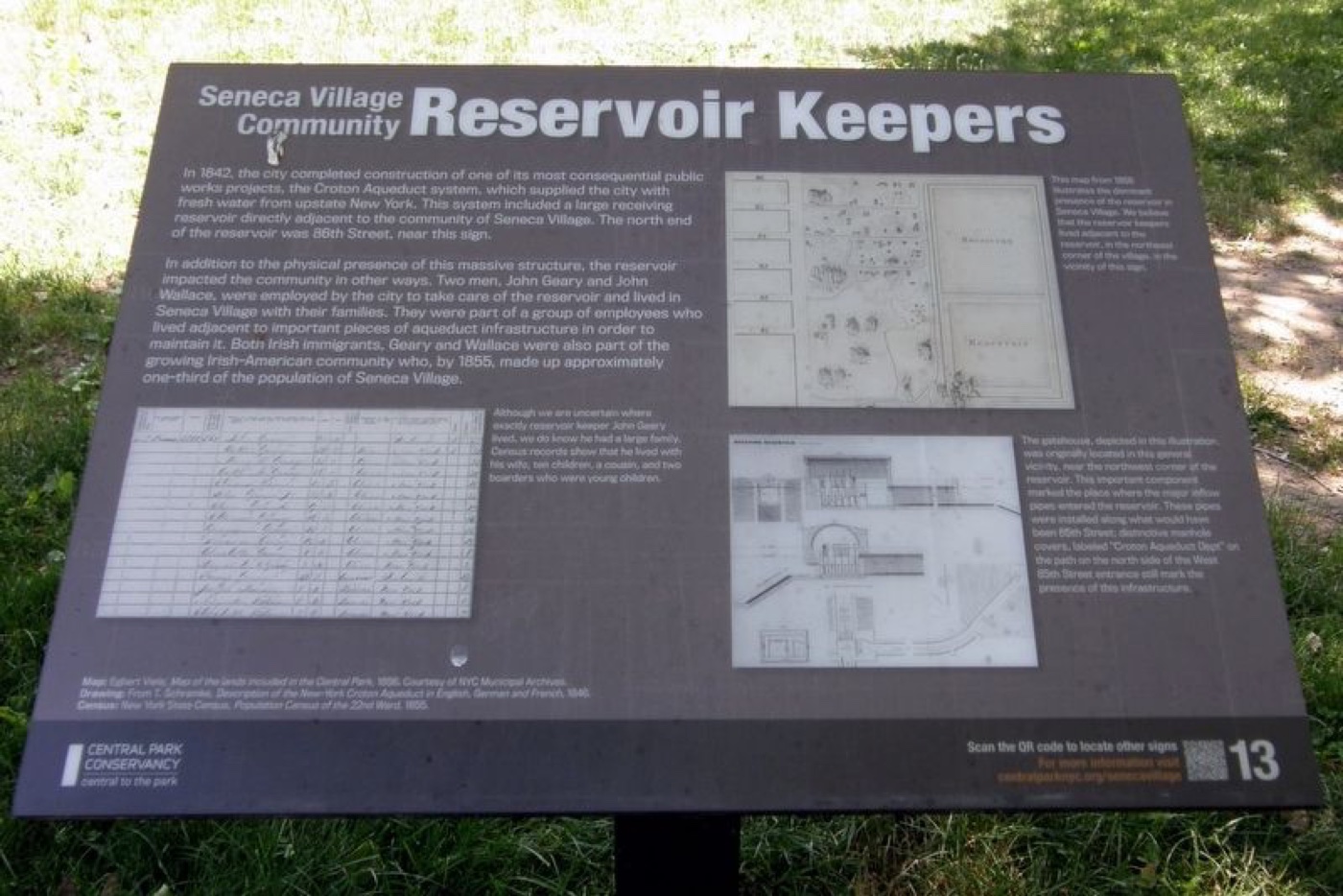 Reservoir Keepers
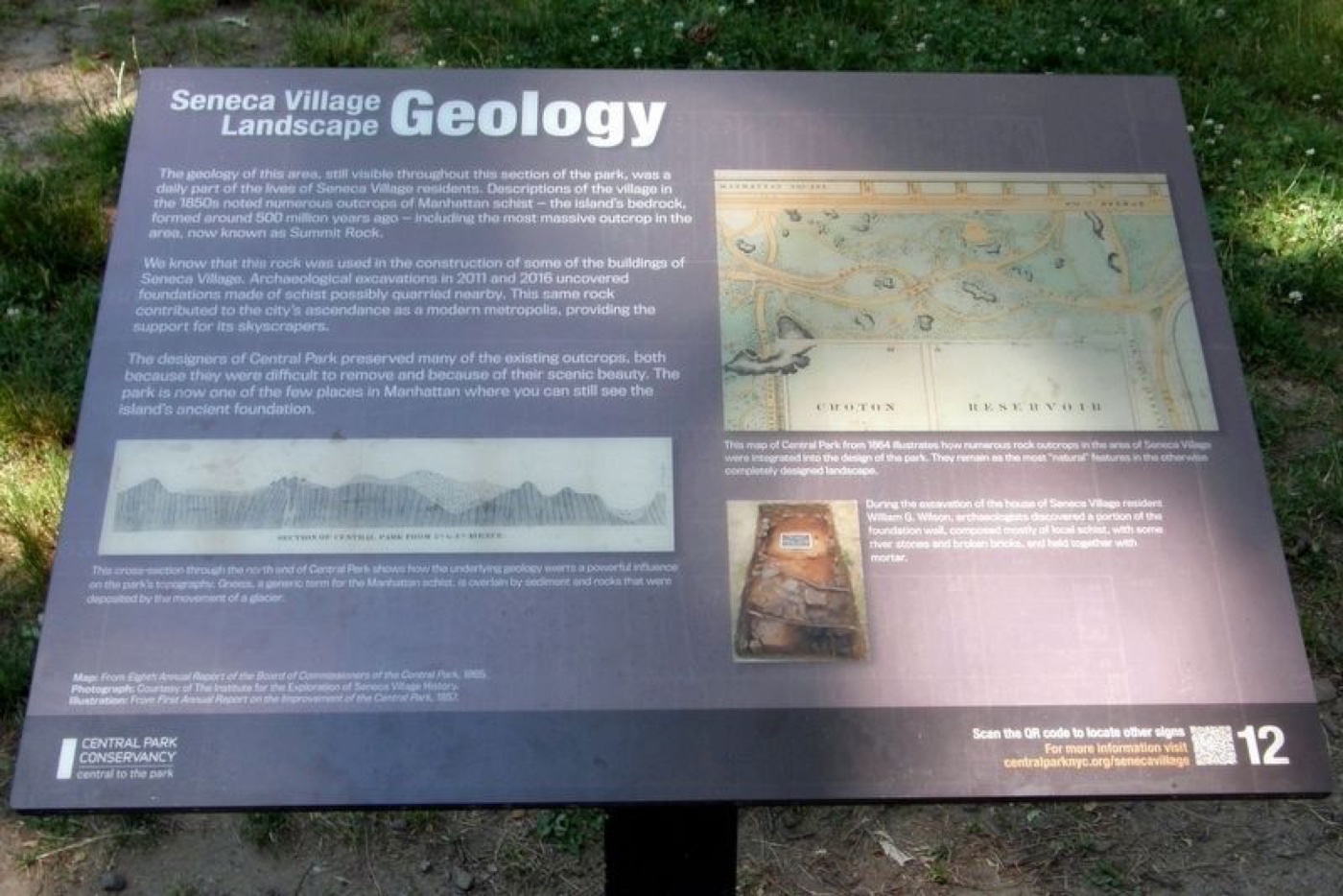 Geology
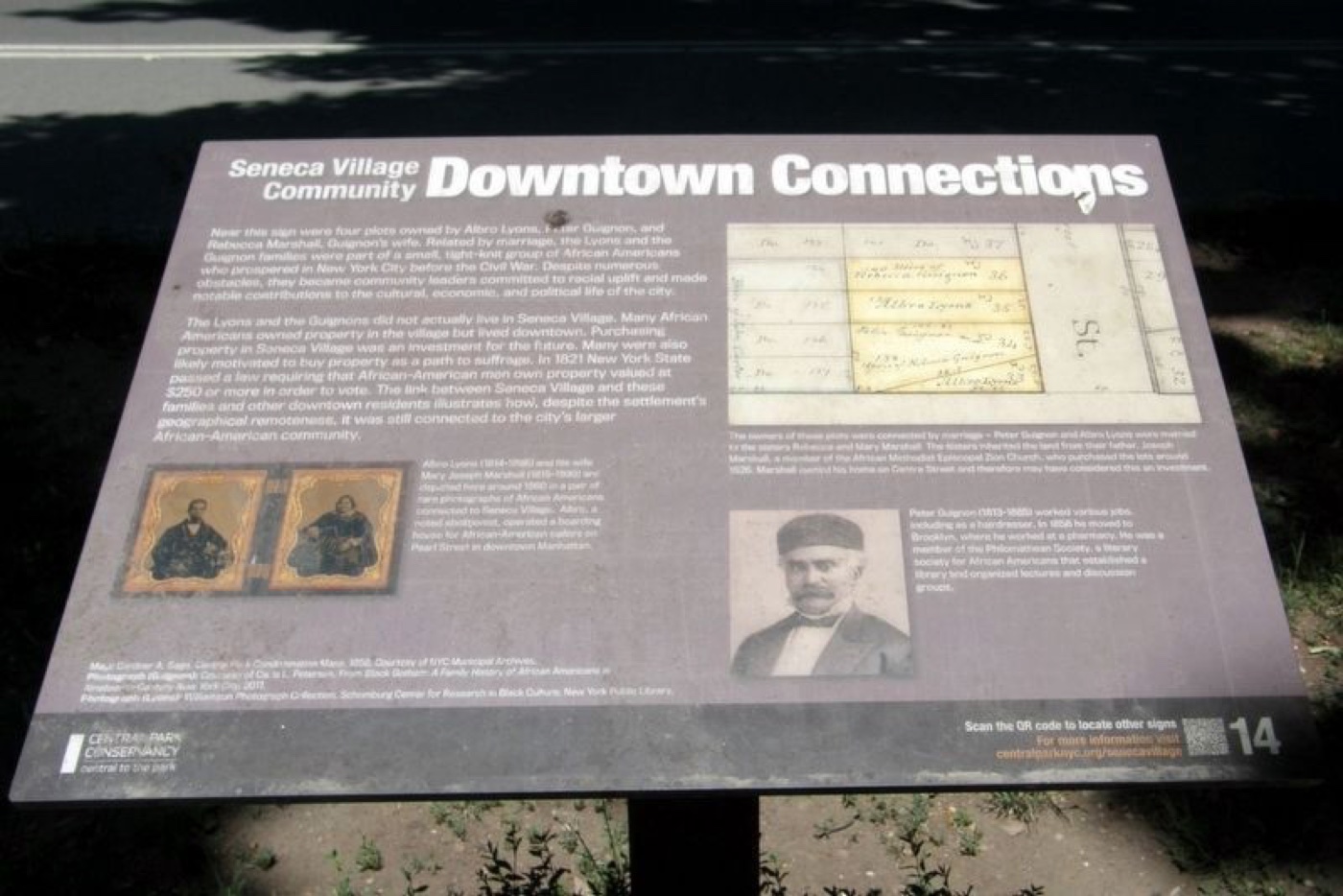 Downtown Connections
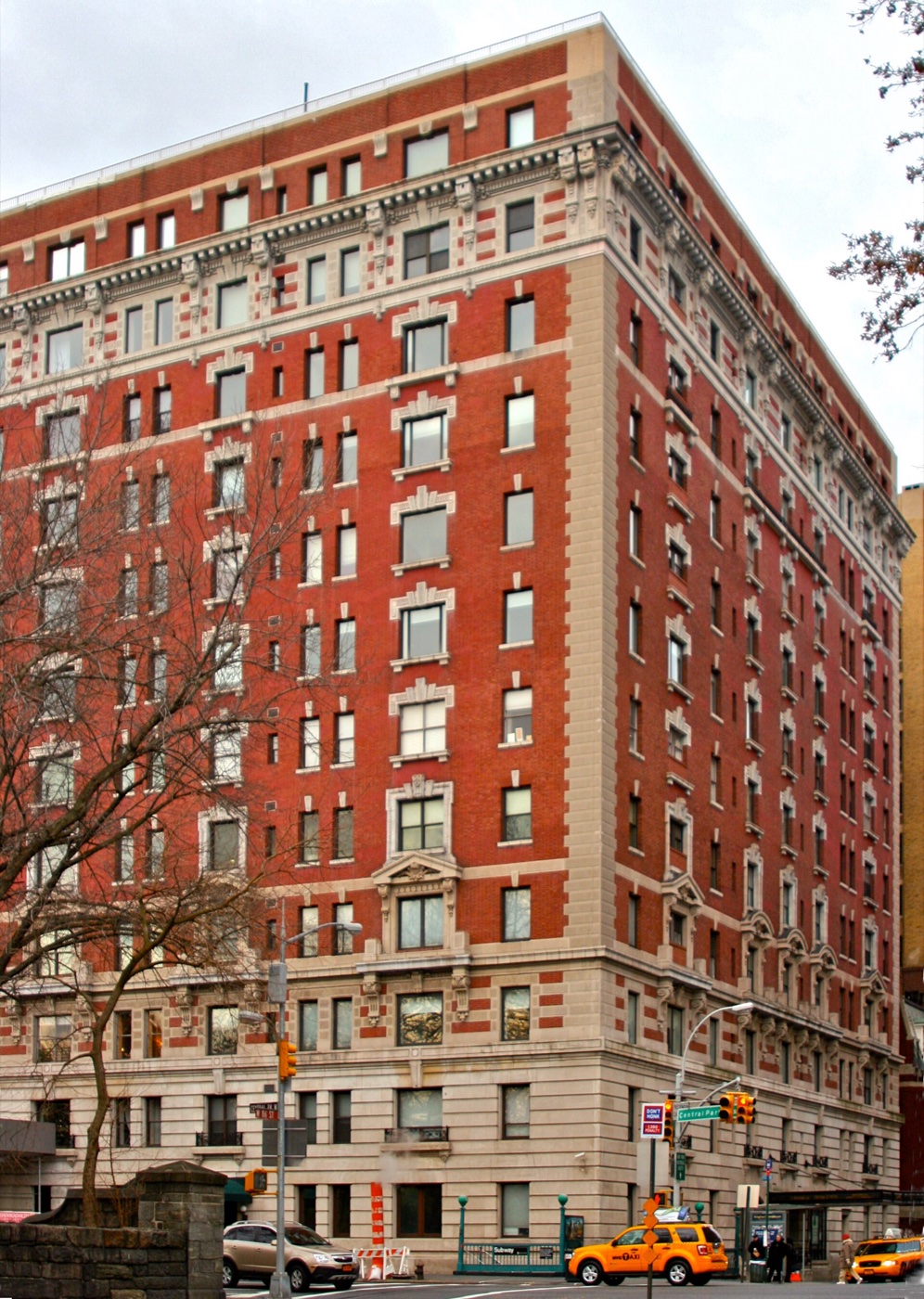 257 Central Park West