History · Manhattan
The Archaeology of the Stadt Huys Block
Beneath the Streets: New Amsterdam's Lost Tavern
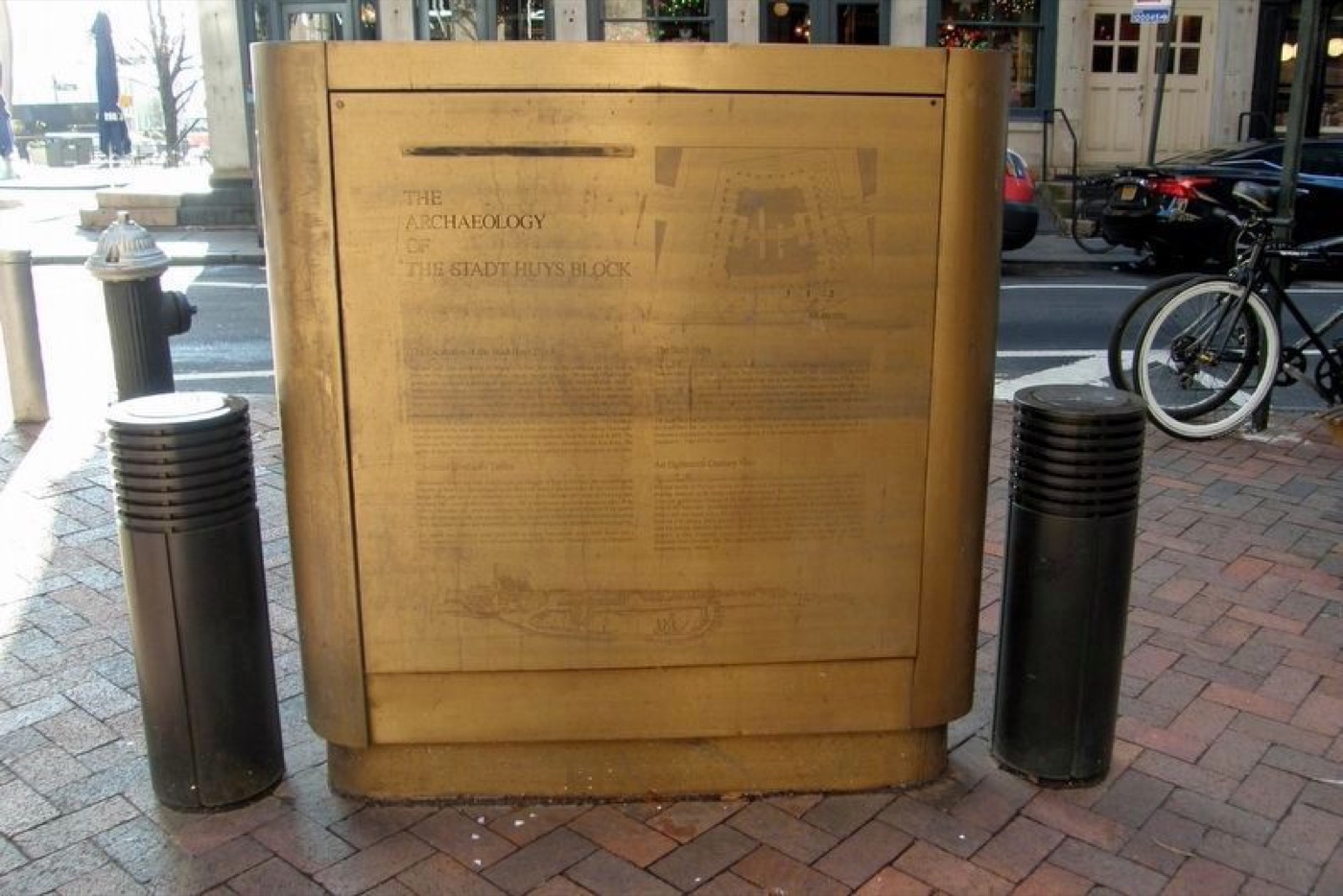
Explore the site where a 17th-century tavern once hosted city leaders and locals, revealed through archaeological digs beneath Manhattan’s Financial District.
The story
In 1979-80, archaeologists uncovered foundations and artifacts from the Lovelace Tavern, built in 1670 by Governor Francis Lovelace, which briefly stood as New York's City Hall after the original Stadt Huys was condemned in 1697. This tavern served as a social hub, evident from clay tobacco pipes and wine bottle fragments found beneath Stone Street, itself a 17th-century thoroughfare. Nearby, preserved outlines in the plaza’s paving mark where the oldest public buildings once stood, connecting today's bustling streets to New Amsterdam's colonial past.
Source: HMDB — The Archaeology of the Stadt Huys Block (archived 2025)
Find it with City Ramble →On our story walks
Stop 7 of 9 · New Amsterdam: the Dutch Town Under Your Feet
A city hall that started as an inn
The first City Hall in New York began as an inn, built in 1641. When New Amsterdam became a city in 1653, the inn became City Hall, the center of government. Archaeologists dug here and found many clay tobacco pipes and pieces of wine bottles. Look down: colored outline stones in the plaza show where the old buildings stood.
Visiting
HMDB marker coordinates; viewing access unverified, Manhattan. City Ramble stops can be found from public sidewalks and parks; buildings, churchyards and museums keep their own opening hours. Open in Google Maps.
Nearby
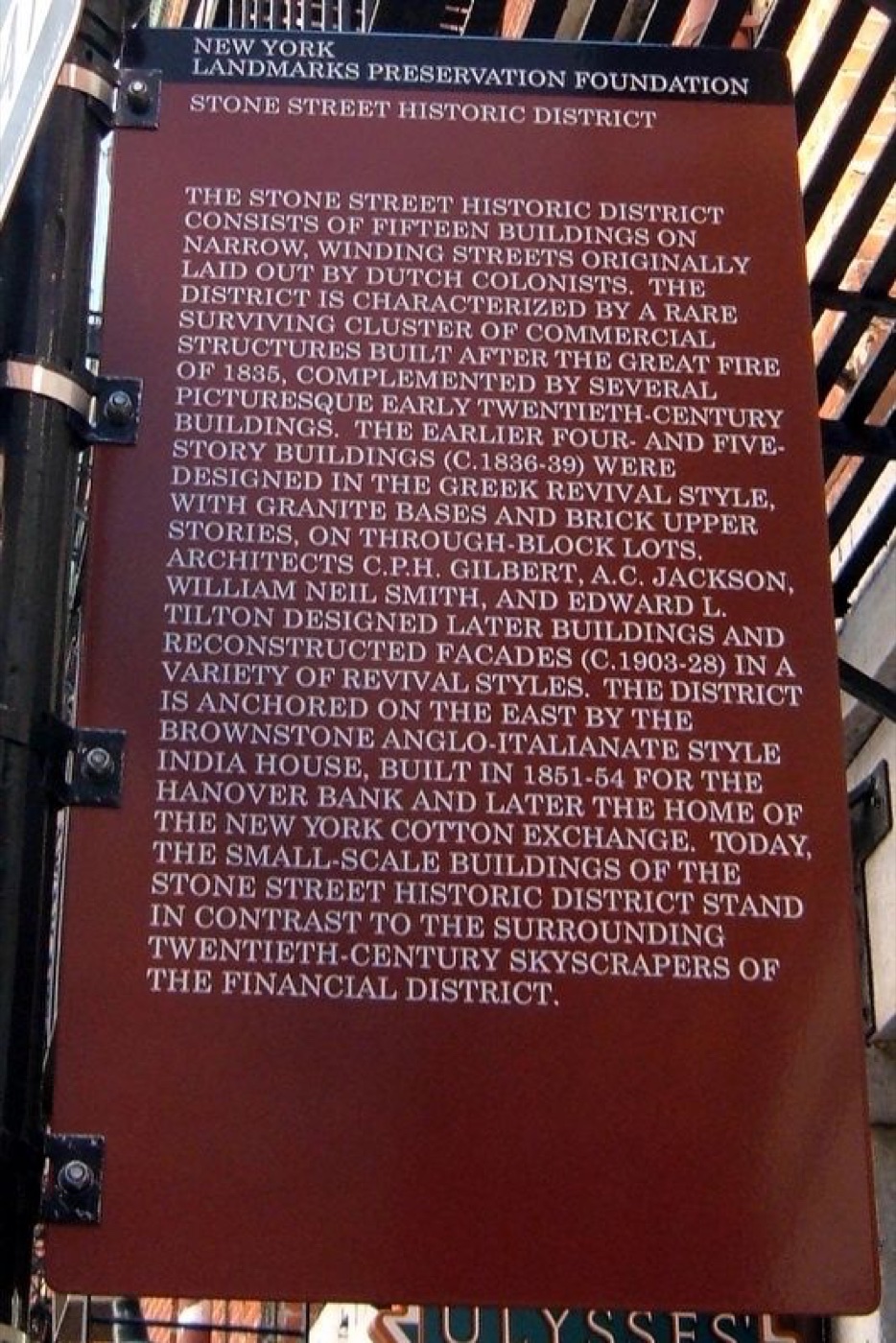 Stone Street Historic District
Architecture · about 1 min walk
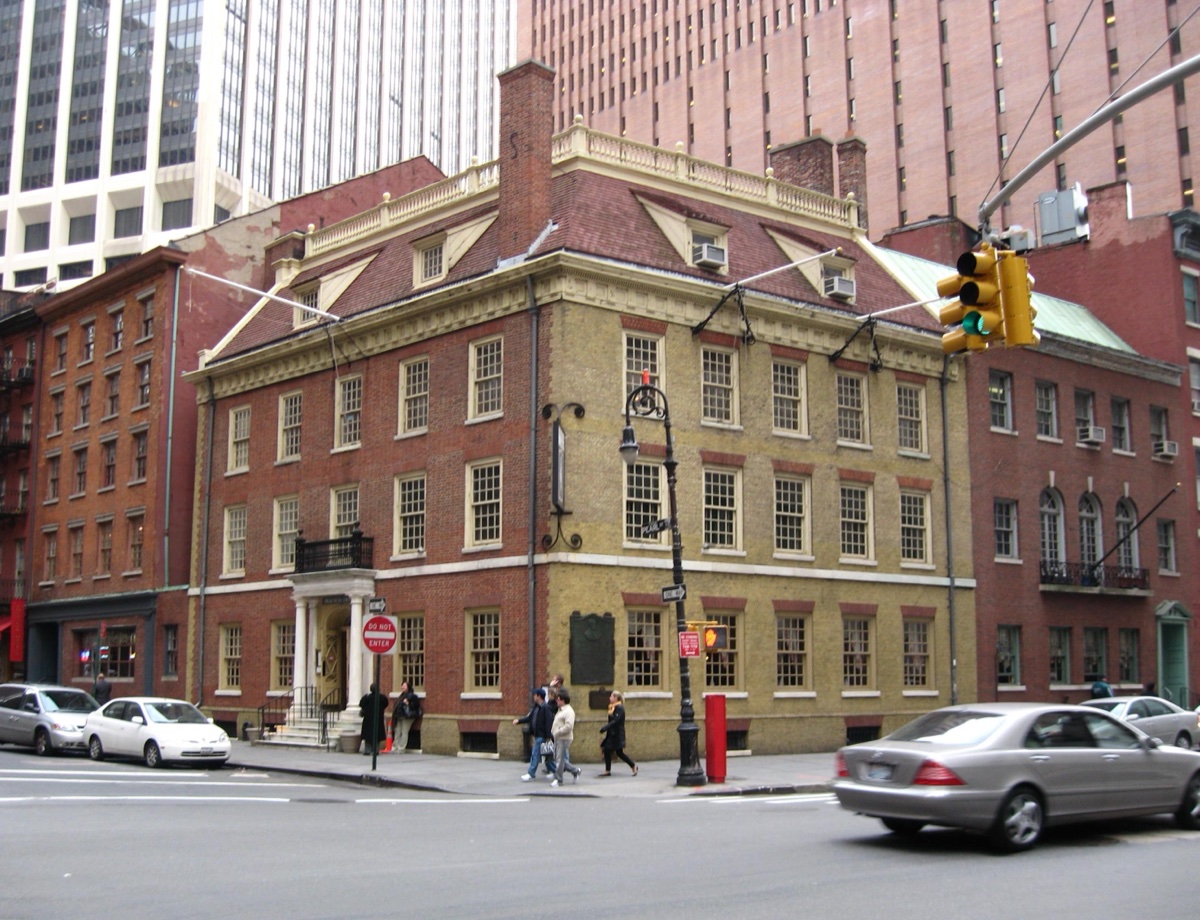 Fraunces Tavern
History · about 1 min walk
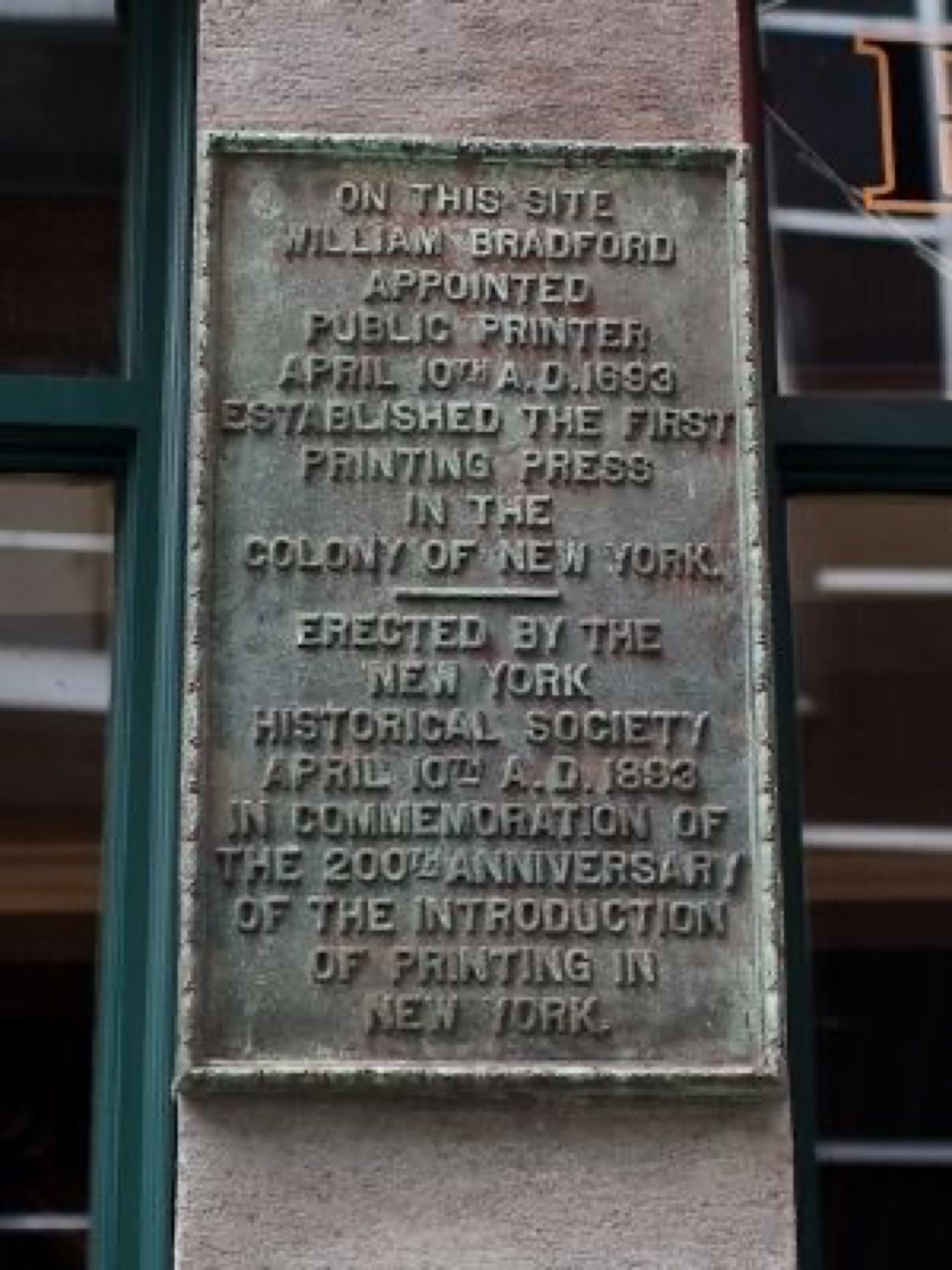 First Printing Press in the Colony of New York
History · about 1 min walk
 Vietnam Veterans Plaza
History · about 1 min walk
 The First Huguenot Church in New York City
Food & culture · about 2 min walk
 25 Water Street
Architecture · about 2 min walk