History · Manhattan
New York’s Municipal Slave Market
Wall Street’s Hidden Slave Market History
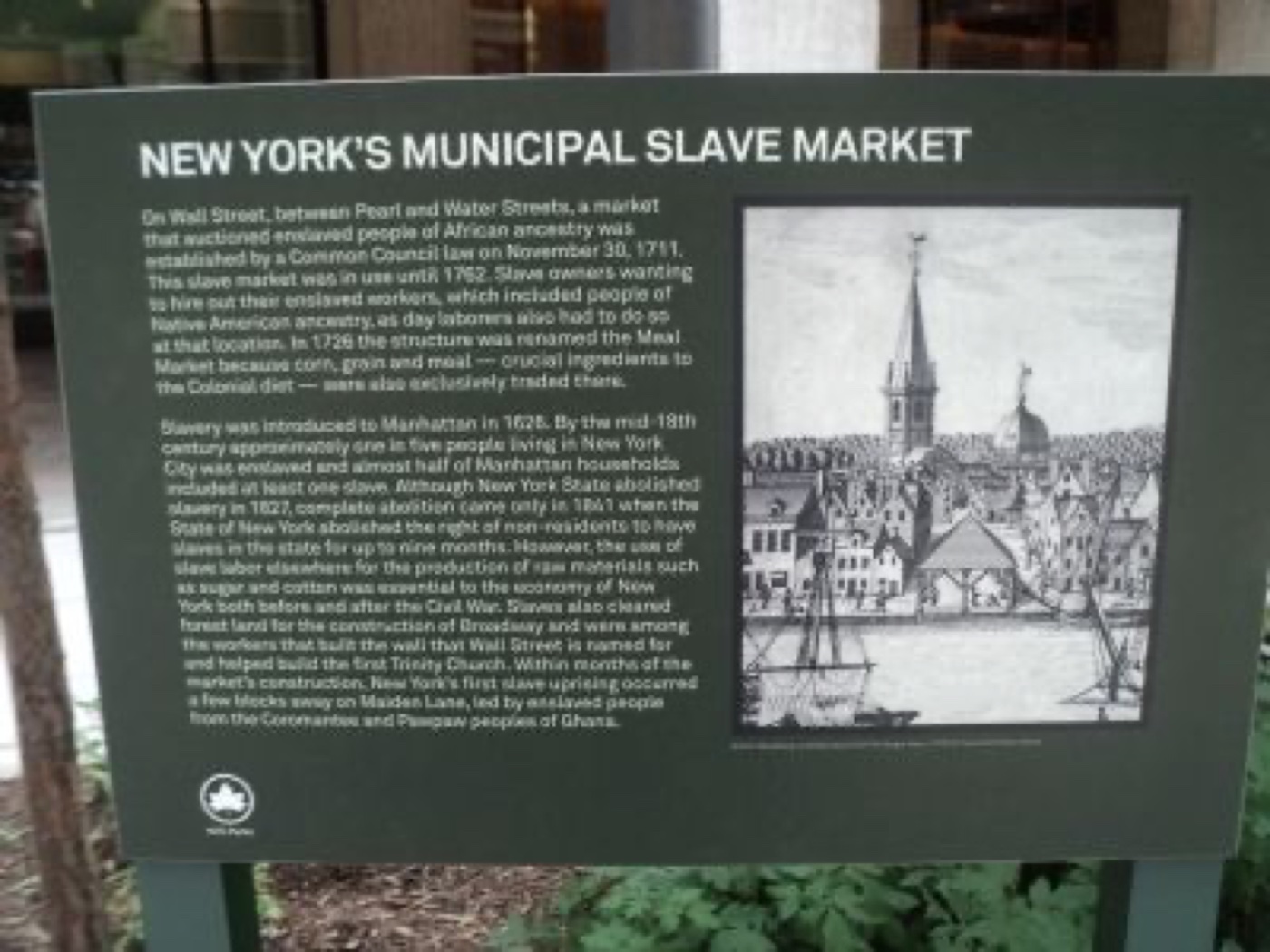
Near the bustle of Wall Street lies the site once known as New York’s Municipal Slave Market, where enslaved people were bought, hired out, and traded starting in 1711.
The story
In 1711, New York’s Common Council established a Municipal Slave Market on Wall Street between Pearl and Water Streets. This site not only hosted auctions of enslaved African and Native American workers but also the hiring out of enslaved laborers for day work. By 1726, reflecting a shift in use, the structure was renamed the Meal Market, trading essential foods like corn and grain. This market stood as a stark reminder of slavery’s deep roots in Manhattan, where one in five residents was enslaved by the mid-18th century, and where enslaved laborers helped build the Wall for which Wall Street is named, as well as the first Trinity Church. Remarkably, within months of this market’s opening, New York’s first slave uprising occurred nearby on Maiden Lane, led by enslaved people from Ghana.
Source: HMDB — New York’s Municipal Slave Market (archived 2020)
Find it with City Ramble →Visiting
100 Wall Street, New York NY 10005, United States of America., Manhattan. City Ramble stops can be found from public sidewalks and parks; buildings, churchyards and museums keep their own opening hours. Open in Google Maps.
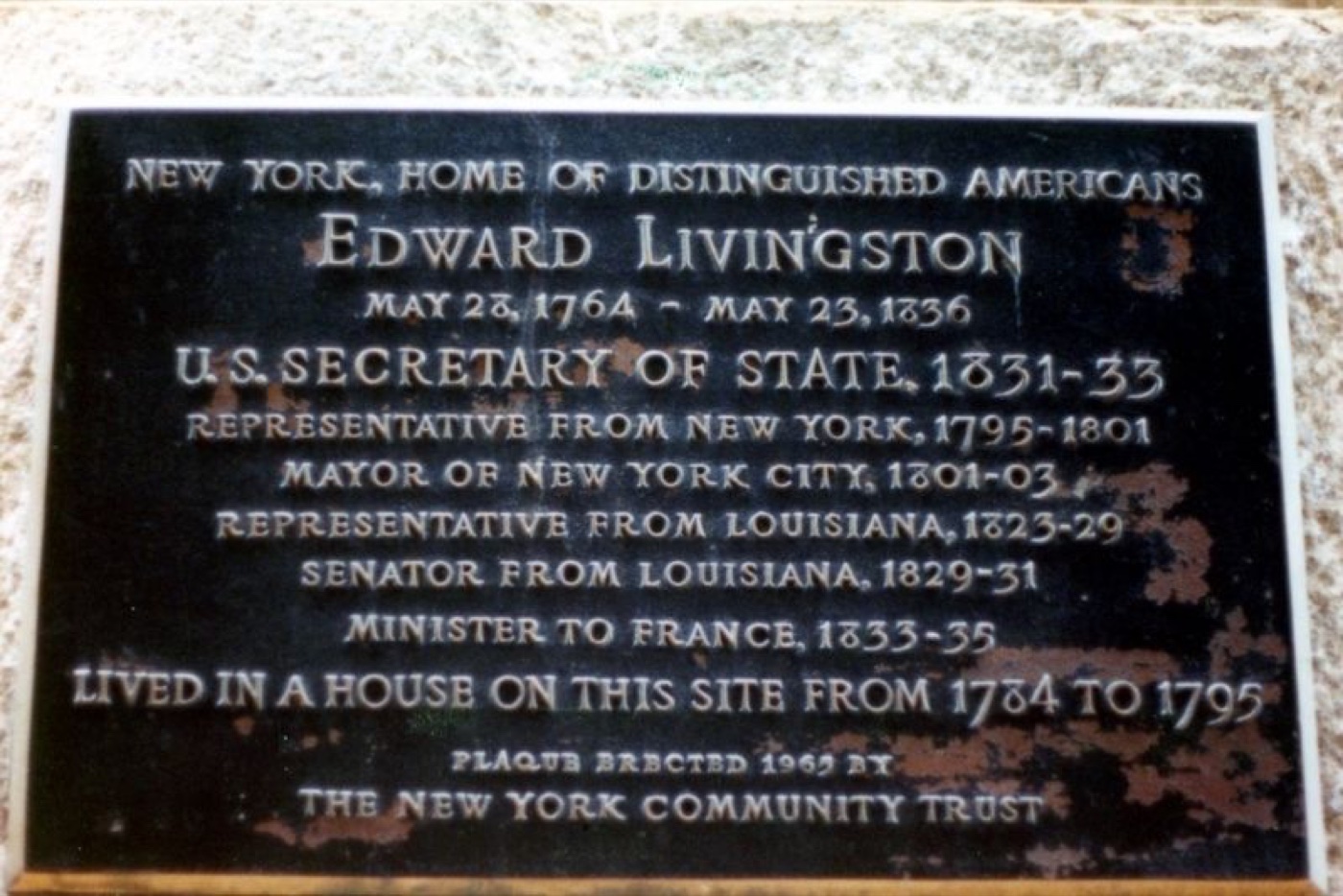 Edward Livingston
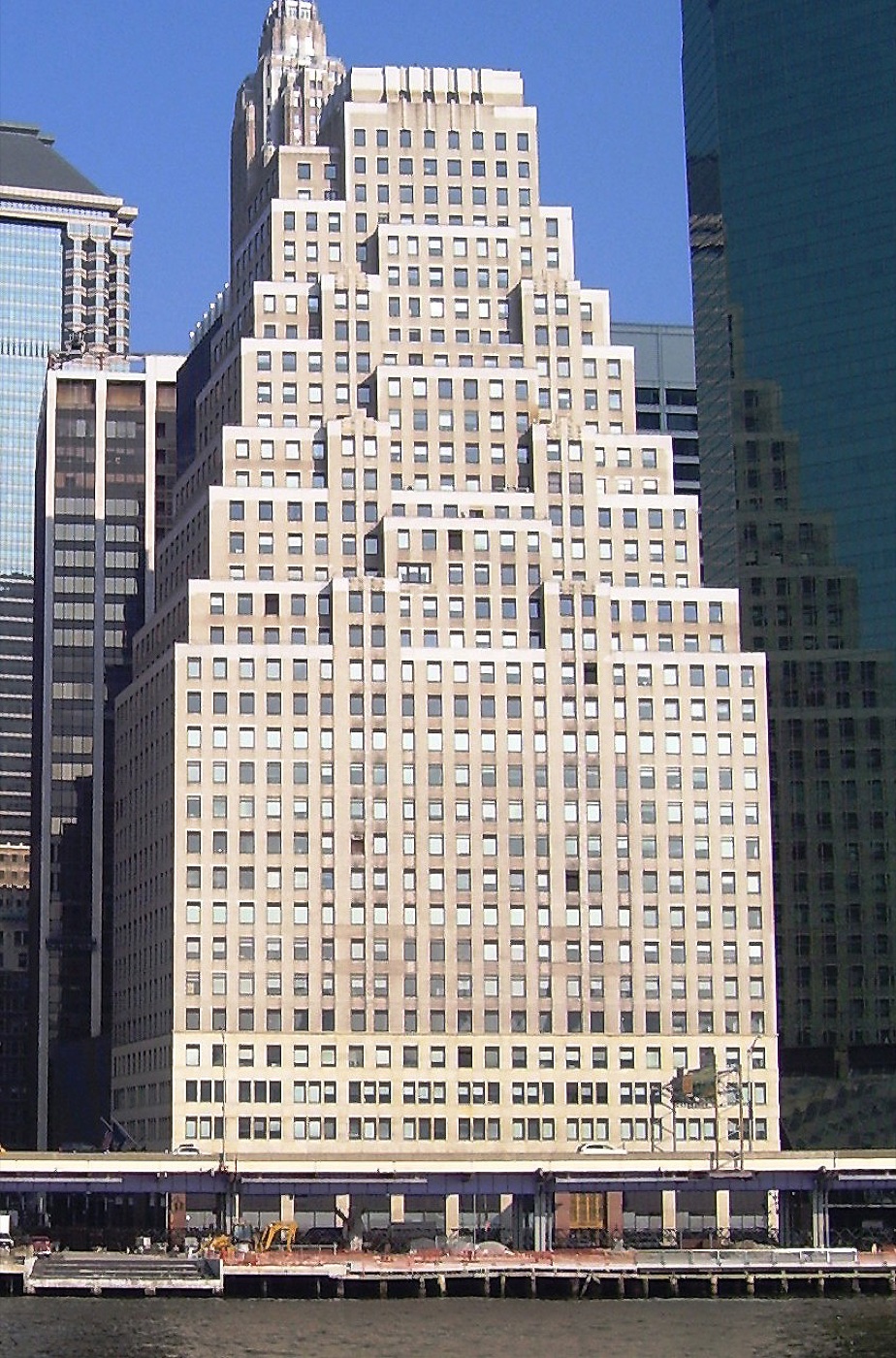 120 Wall Street
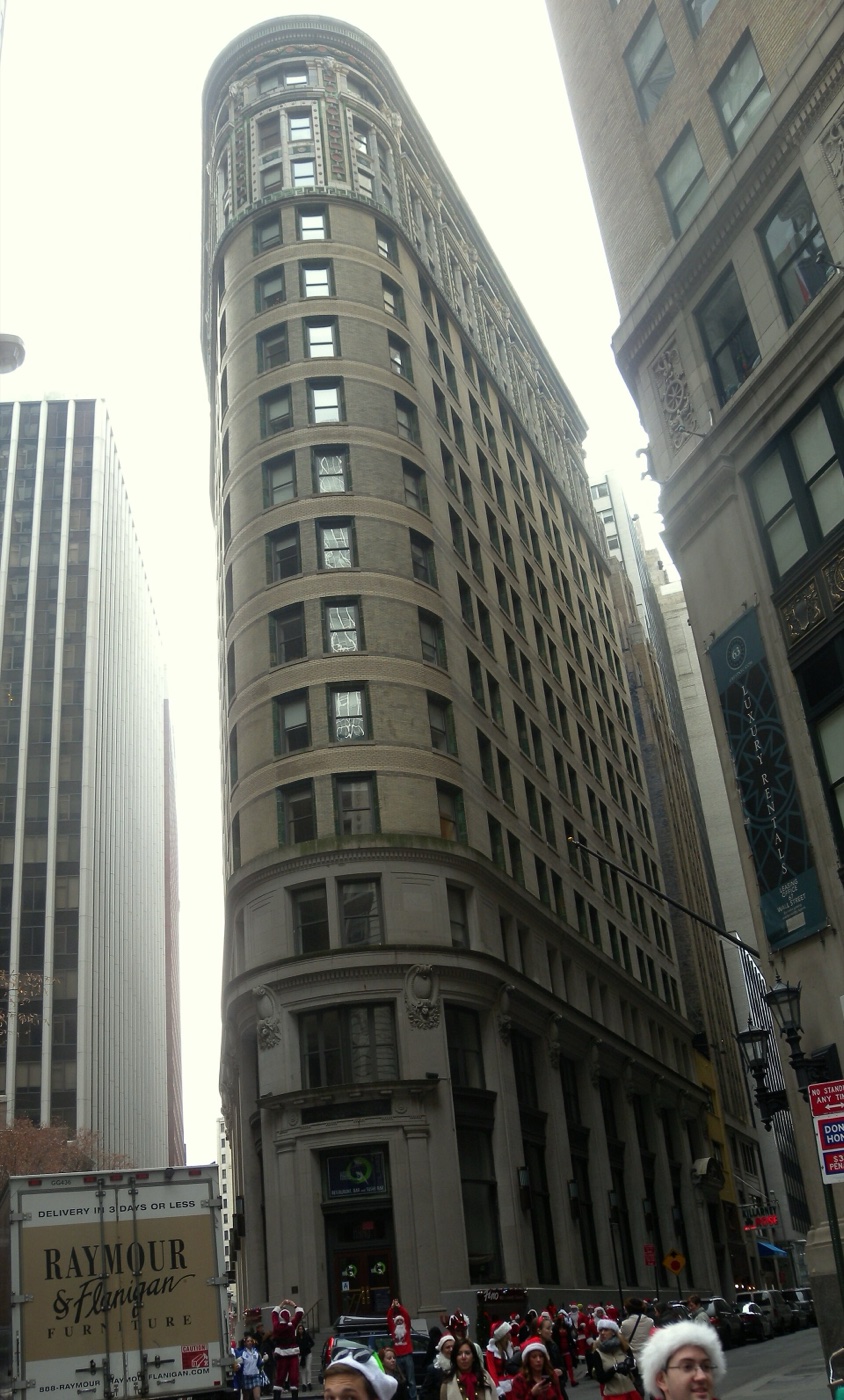 1 Wall Street Court
 Continental Center (New York City)
 70 Pine Street
 George Clinton