Architecture · Manhattan
How the Bridge was Built
Brooklyn Bridge's Hidden Wooden Foundations
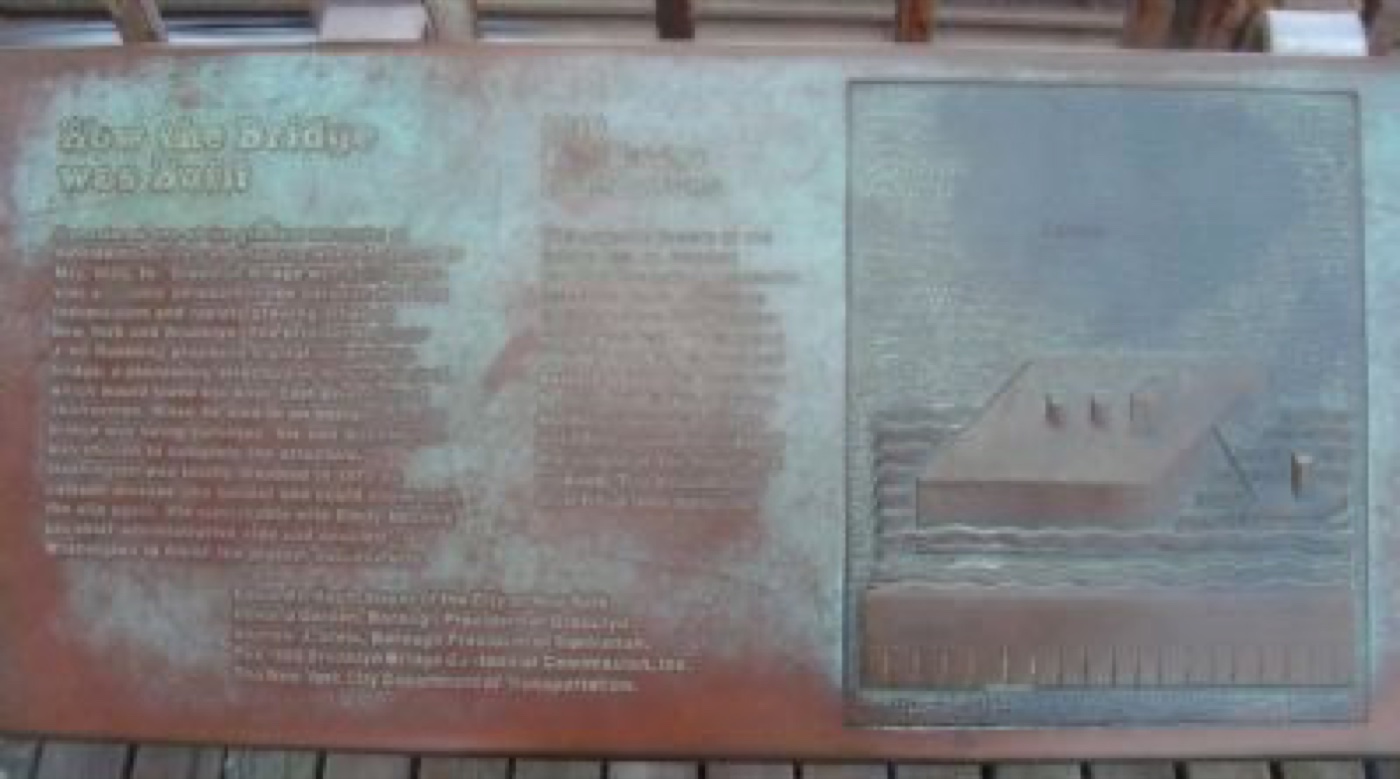
Discover how giant wooden chambers sunk deep beneath the East River helped support the Brooklyn Bridge's towering stone pillars over 135 feet above the water.
The story
When the Brooklyn Bridge opened in 1883, it stood as a triumph of 19th-century engineering. Its majestic towers rest on pneumatic caissons—giant, bottomless wooden chambers built on land then carefully sunk to the riverbed. Inside these caissons, workers excavated dirt and rock under compressed air to reach firm ground, a risky task that led to many suffering 'the bends.' These strong foundations supported the New Jersey limestone and Maine granite towers, each soaring 272 feet above high water, from which steel cables were spun to suspend the bridge's roadway 135 feet above the East River. The bridge united two bustling cities and remains a testament to courage, innovation, and collaboration.
Source: HMDB — How the Bridge was Built (archived 2020)
Find it with City Ramble →Visiting
HMDB marker coordinates; viewing access unverified, Manhattan. City Ramble stops can be found from public sidewalks and parks; buildings, churchyards and museums keep their own opening hours. Open in Google Maps.
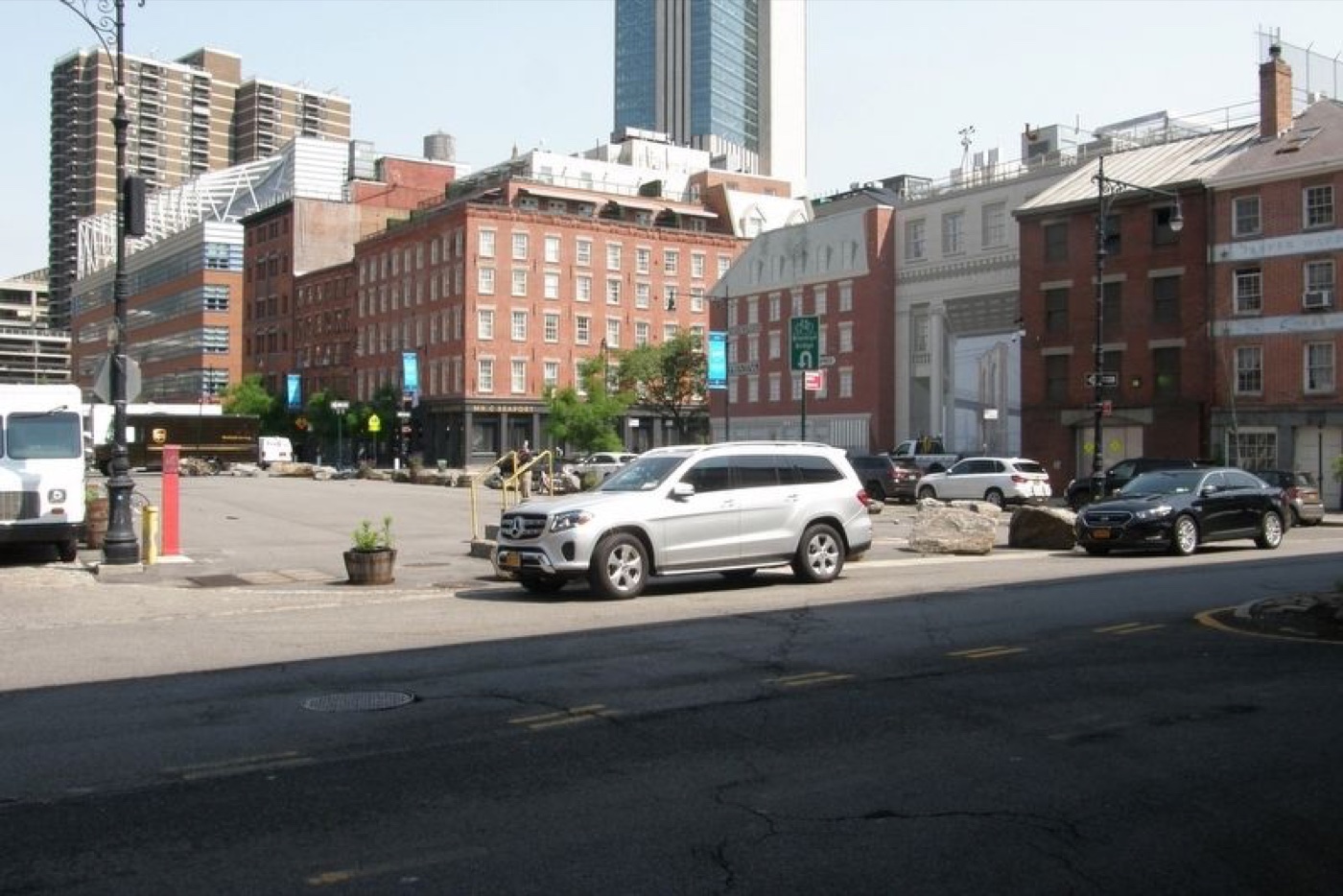 Peck Slip
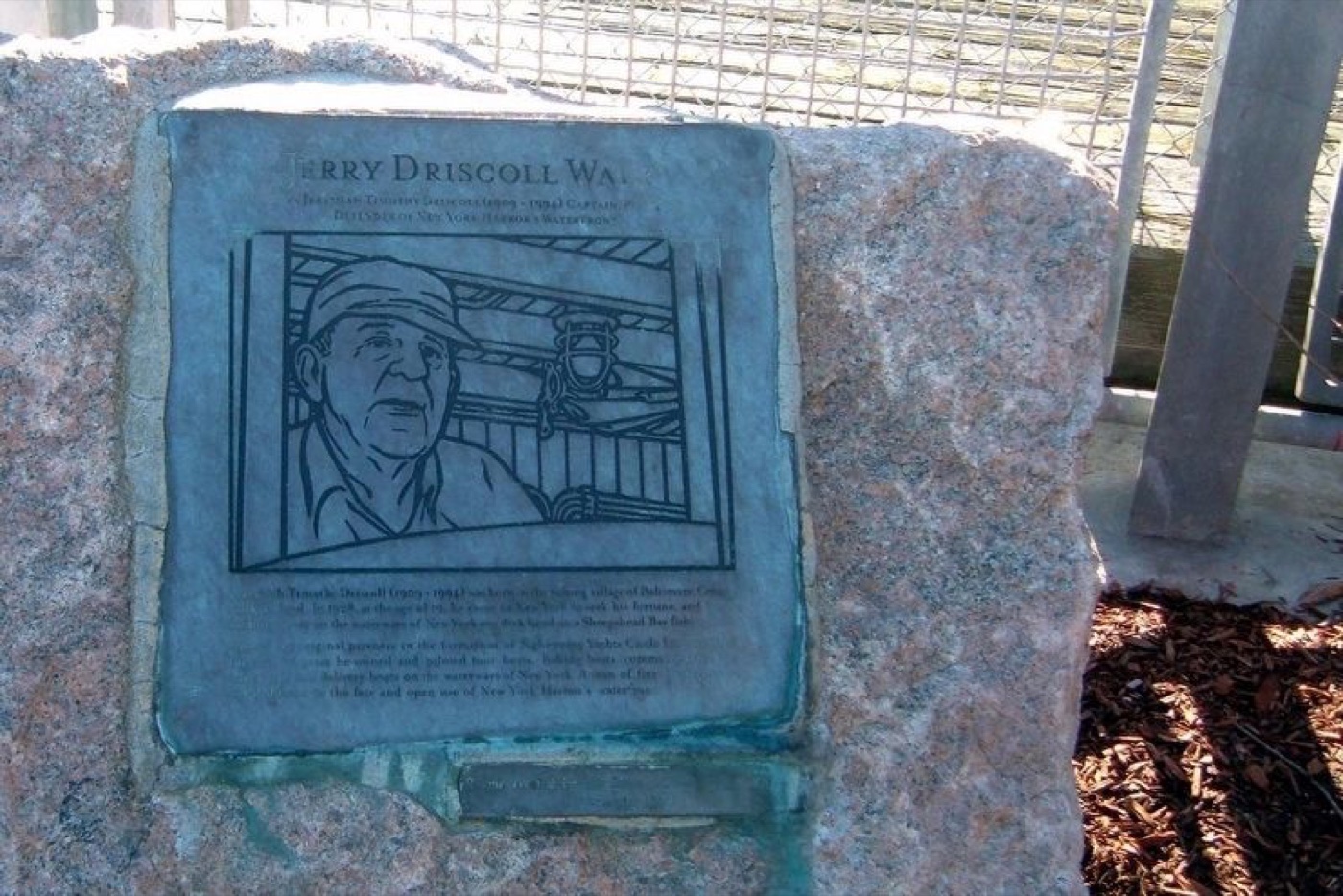 Jerry Driscoll Walk
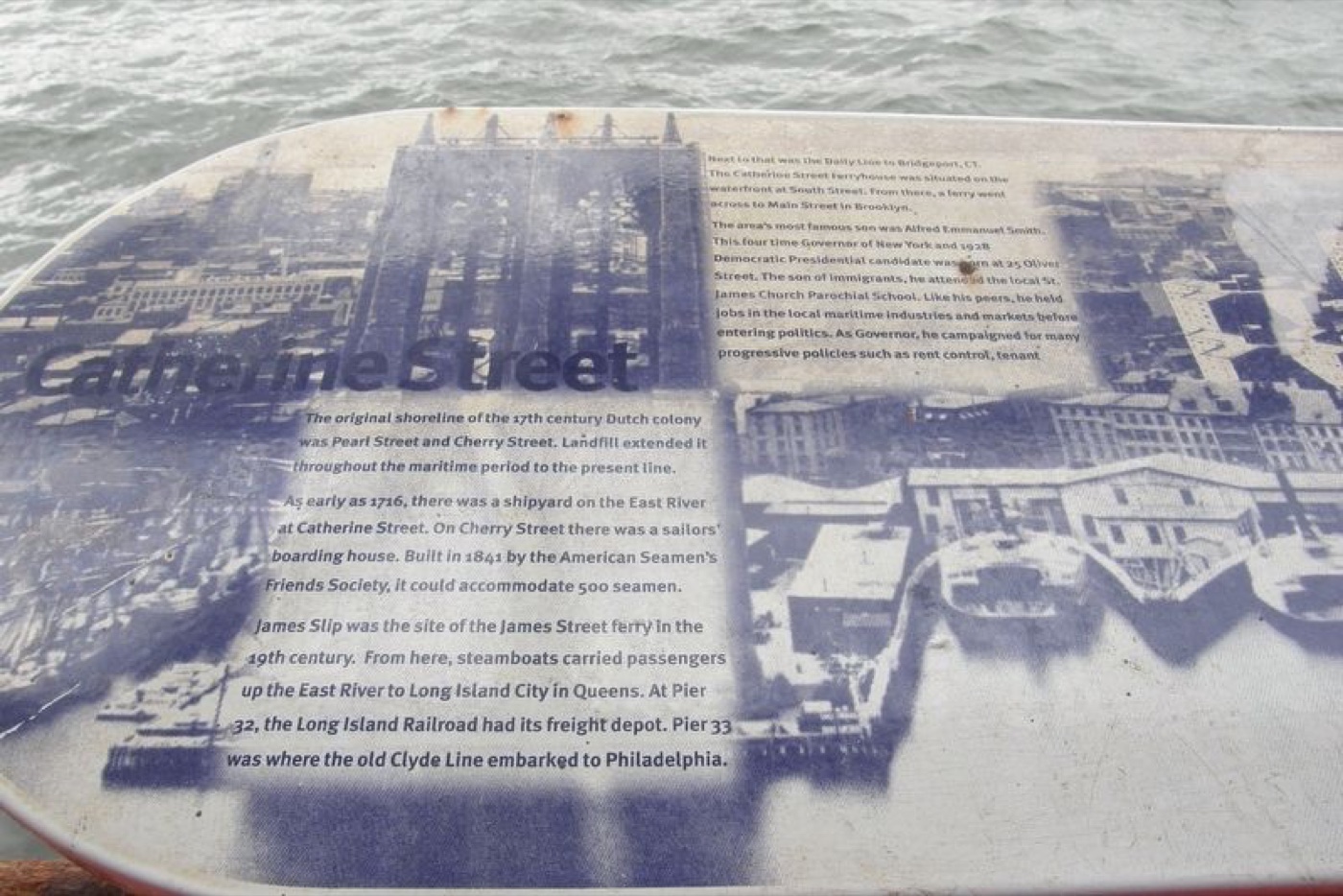 Catherine Street
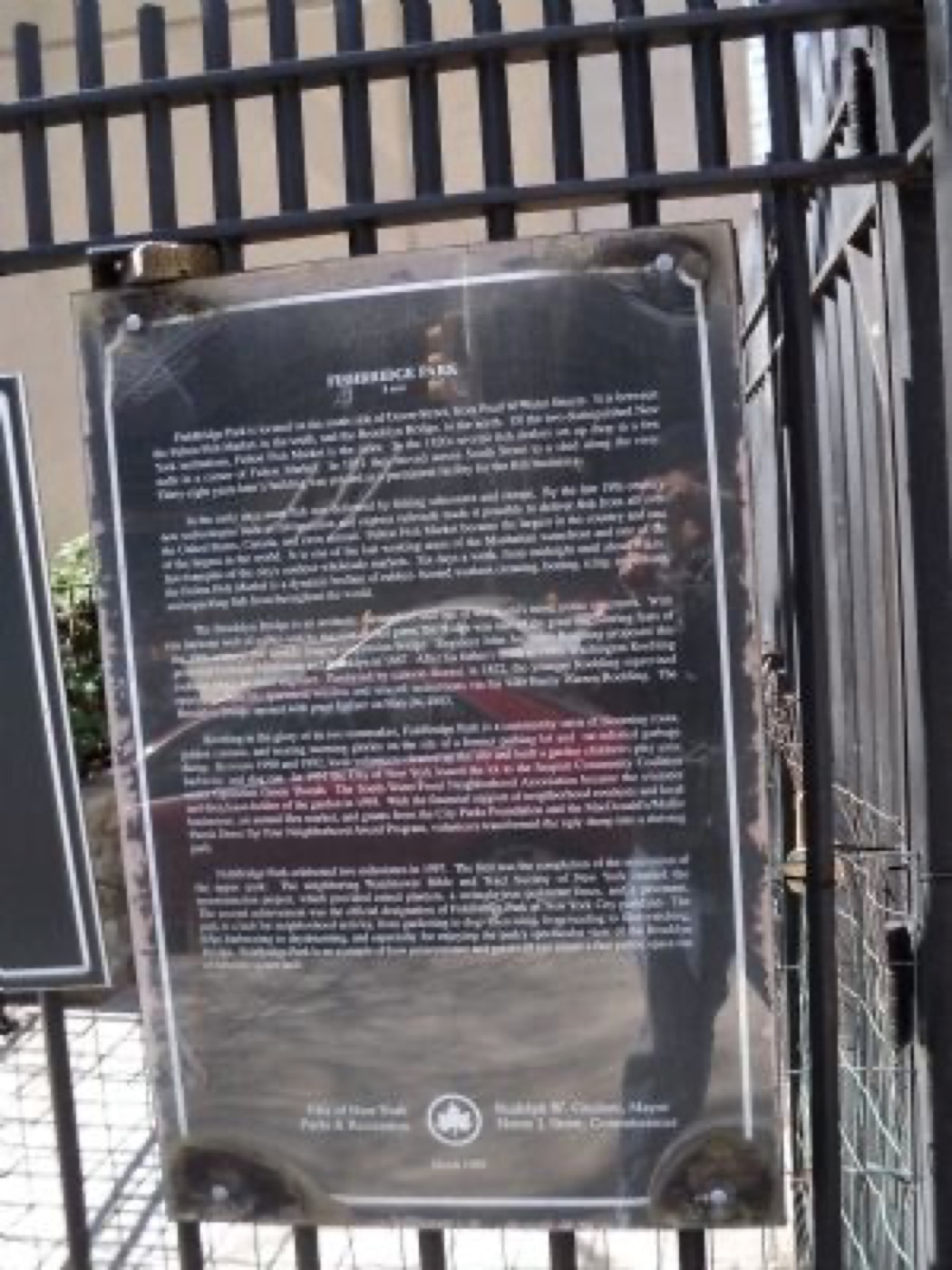 FishBridge Park
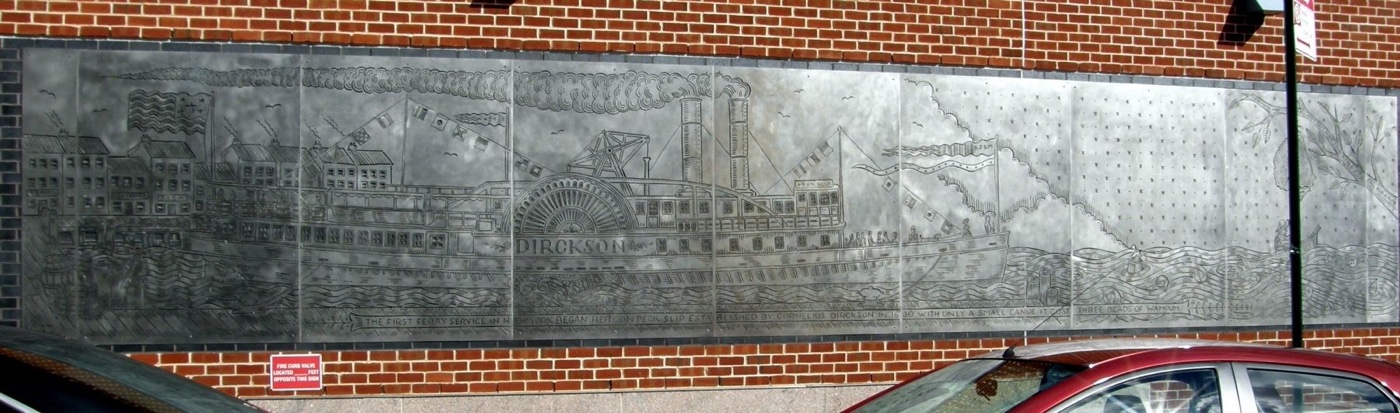 First ferry service in New York
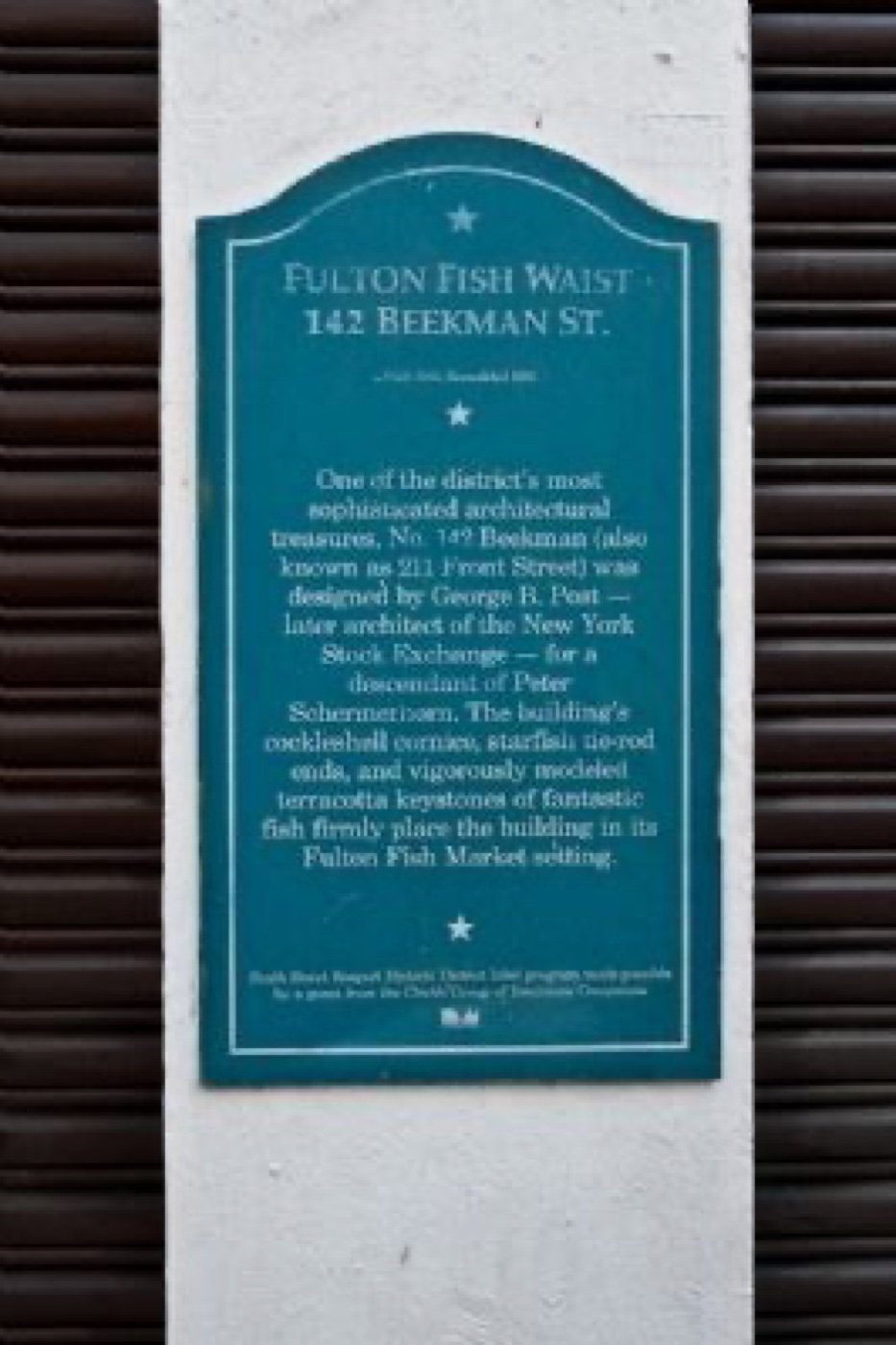 Fulton Fish Waist - 142 Beekman Street